The Ultimate Guide to Blood Pressure: Tracking, Causes, and How to Lower It
🩺 Clinical Reference Guide
This article synthesizes current, evidence-based clinical guidelines from the American Heart Association (AHA), the European Society of Cardiology (ESC), and the National Institutes of Health (NIH). It is intended for educational purposes and does not constitute medical advice. Always consult your physician.
Chapter 1: The Anatomy of the "Silent Killer"
Nearly half of all adults in the United States, and over a billion people worldwide, suffer from high blood pressure. Yet, because it famously shows zero symptoms until severe damage has occurred, millions of people walk around completely unaware that their cardiovascular system is under extreme duress. This is why hypertension is globally known as the "silent killer."
However, a diagnosis of hypertension is not a death sentence. It is a highly manageable condition. When you understand the physiological mechanics of your heart, how to take an accurate measurement at home, and how to track your vitals over time, you take ultimate control of your health.
What Exactly is Blood Pressure?
To understand blood pressure, imagine the plumbing system in a house. The heart is the central water pump, and your blood vessels (arteries) are the pipes. Blood pressure is simply the physical, mechanical force of your blood pushing outward against the inner walls of your arteries as your heart pumps blood to the rest of your body.
The Organ-by-Organ Impact
When pressure remains too high for too long, it acts like a high-pressure power washer on fragile pipes. This doesn't just hurt the heart; it destroys the entire body's micro-plumbing:
- The Heart (Cardiomyopathy): To pump against high pressure in the vessels, the heart muscle has to work harder. Over time, the heart muscle thickens (Left Ventricular Hypertrophy), which ultimately leads to heart failure.
- The Brain (Stroke & Dementia): High pressure damages the delicate blood vessels in the brain, leading to micro-tears and clots (ischemic stroke) or bursts (hemorrhagic stroke). It is also a leading cause of vascular dementia.
- The Kidneys (Nephropathy): The kidneys are essentially massive filters made of tiny blood vessels. High pressure destroys these filters, making hypertension the second leading cause of kidney failure.
- The Eyes (Retinopathy): The blood vessels in the retina are incredibly fragile. High pressure can cause them to bleed, leading to permanent vision loss.
Chapter 2: Decoding the Numbers (Systolic, Diastolic, MAP)
When you use a blood pressure cuff (a sphygmomanometer), you receive a reading with two primary numbers, such as "120 over 80" (written as 120/80 mmHg). The unit "mmHg" stands for millimeters of mercury.
- Systolic Blood Pressure (The Top Number): This measures the pressure in your arteries the exact moment your heart muscle squeezes (contracts) and pumps blood out. Because this is when the force is at its maximum, it is always the higher number.
- Diastolic Blood Pressure (The Bottom Number): This measures the pressure in your arteries when your heart rests between beats and fills with blood. Because the heart is relaxing, this is the lower number.
💡 Advanced Vitals: Pulse Pressure & MAP
Modern cardiologists look beyond just the basic two numbers. Pulse Pressure (PP) is the difference between your systolic and diastolic numbers (e.g., 120 - 80 = 40). A consistently high pulse pressure (over 60) indicates that your arteries have become stiff and hardened. Mean Arterial Pressure (MAP) calculates the average pressure during a single cardiac cycle, providing insight into how well your organs are being perfused with blood. (Note: Apps like BP Tracker Pro automatically calculate MAP and Pulse Pressure for you in real-time.)
Chapter 3: Official Clinical Guidelines (AHA vs. ESC)
Knowing your numbers means nothing if you don't know what category they fall into. The medical community relies on strict guidelines, but these guidelines vary slightly by region. The American Heart Association (AHA) uses a very aggressive threshold, whereas the European Society of Cardiology (ESC) utilizes slightly different targets.
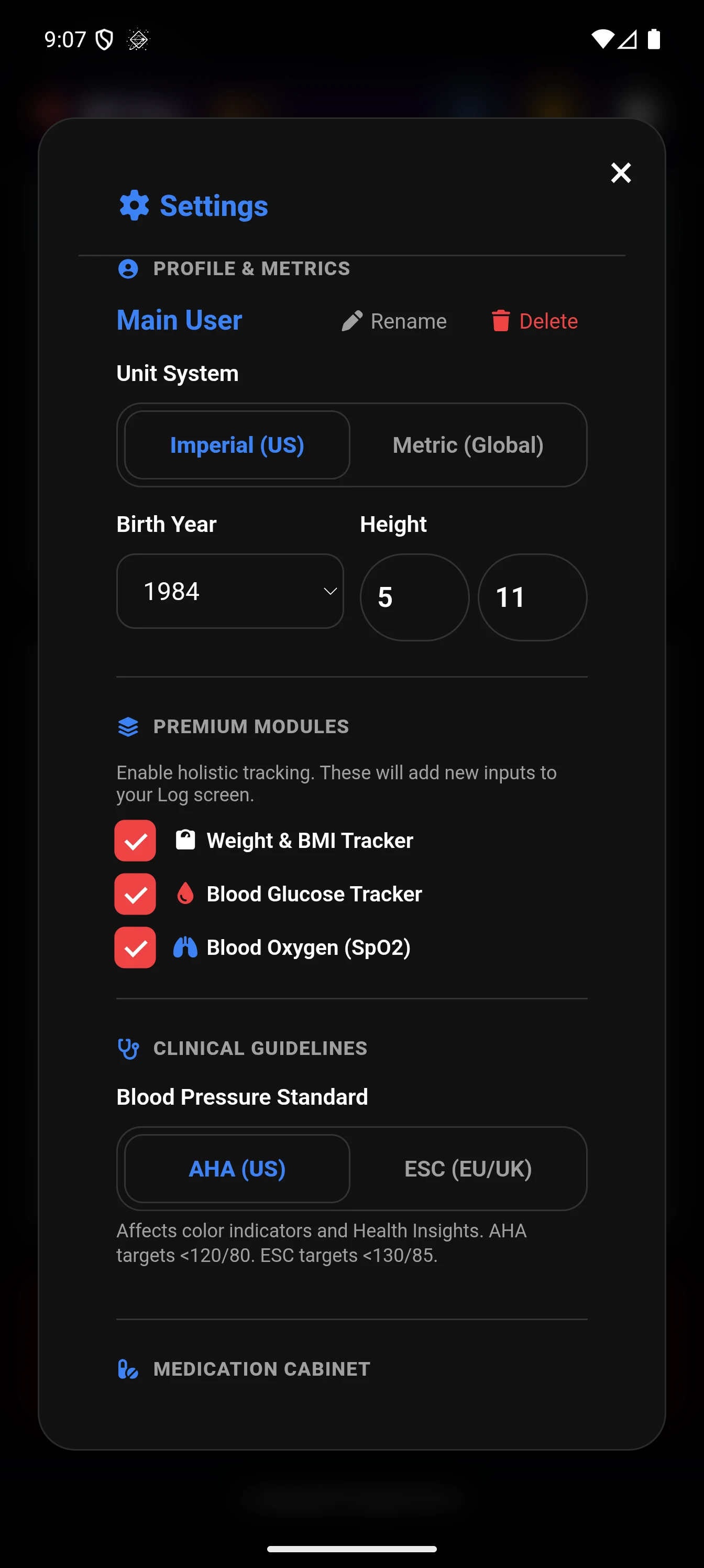
If you are tracking your health digitally, BP Tracker Pro is one of the only apps that allows you to natively toggle between AHA and ESC guidelines in its settings, dynamically adjusting your charts and clinical reports based on your region.
The AHA Blood Pressure Chart
| Category | Systolic (Top) | Diastolic (Bottom) | Clinical Action | |
|---|---|---|---|---|
| Normal | Less than 120 | AND | Less than 80 | Maintain healthy habits. |
| Elevated | 120 – 129 | AND | Less than 80 | Adopt lifestyle changes to prevent progression. |
| Stage 1 Hypertension | 130 – 139 | OR | 80 – 89 | Consult a doctor; lifestyle changes + possible medication based on ASCVD risk. |
| Stage 2 Hypertension | 140 or higher | OR | 90 or higher | Consult a doctor; medication is highly recommended. |
| Hypertensive Crisis | Higher than 180 | AND/OR | Higher than 120 | Seek emergency medical care immediately. |
Chapter 4: The Demographics of Hypertension
Blood pressure is not static; it evolves as our bodies age and experience different life events.
Age and Arterial Stiffness
As we age, our vascular system naturally loses its elasticity—a process known as arteriosclerosis. Because the arteries cannot stretch to accommodate the blood pumped by the heart, the systolic (top) pressure rises steadily. This is why Isolated Systolic Hypertension (a high top number with a normal bottom number) is the most common form of high blood pressure in adults over 65.
Sex and Hormones
Until roughly age 45, men generally have higher rates of hypertension than women. However, after menopause, a woman's risk catches up to and surpasses that of a man. This shift is primarily due to the drop in estrogen, a hormone that helps keep blood vessels flexible and dilated.
Pregnancy (Preeclampsia)
Pregnancy places a massive physiological workload on the heart, as a woman's blood volume increases by up to 45%. If high blood pressure develops after 20 weeks of pregnancy, it is known as Gestational Hypertension. If it is accompanied by protein in the urine or liver/kidney damage, it escalates to Preeclampsia—a severe, potentially fatal complication that requires immediate medical intervention.
Chapter 5: The Circadian Rhythm of Blood Pressure
If you take your blood pressure at 8:00 AM, 2:00 PM, and 11:00 PM, you will get three drastically different numbers. Blood pressure operates on a circadian rhythm.
- The Morning Surge: Before you wake up, your body releases cortisol and adrenaline to prepare you for the day. Blood pressure rises sharply. However, an exaggerated morning surge is highly dangerous and correlates with the fact that most heart attacks and strokes occur in the early morning.
- Nighttime "Dipping": When you enter deep sleep, your blood pressure should drop by 10% to 20%. This is the cardiovascular system's crucial rest period. If your blood pressure remains high at night (known as "non-dipping"), your organs are under 24/7 stress. This is frequently caused by Obstructive Sleep Apnea.
⚠️ The Danger of White Coat Syndrome
White Coat Hypertension occurs when a patient's readings are artificially high at the doctor's office due to clinical anxiety, but perfectly normal at home. Conversely, Masked Hypertension is when readings are normal in the clinic, but dangerously high at home due to daily life stress. This is exactly why doctors now insist that patients track their blood pressure at home over a 30-day period.
Chapter 6: The Ultimate Tool for Home Tracking
You cannot treat what you do not measure. Logging your blood pressure on a random scrap of paper provides zero insight into your cardiovascular trends, pulse pressure, or medication efficacy. However, modern digital health apps come with a massive privacy risk: they store your sensitive medical data on cloud servers to sell to third parties.
Take Control Privately with BP Tracker Pro
Stop paying monthly subscriptions for cloud-based apps. BP Tracker Pro is a premium, ad-free application that keeps your health data 100% offline and private. You pay once, and you own the software for life. Your data never leaves your physical phone.
Download BP Tracker Pro on Google PlayWhy Medical Professionals Recommend BP Tracker Pro:
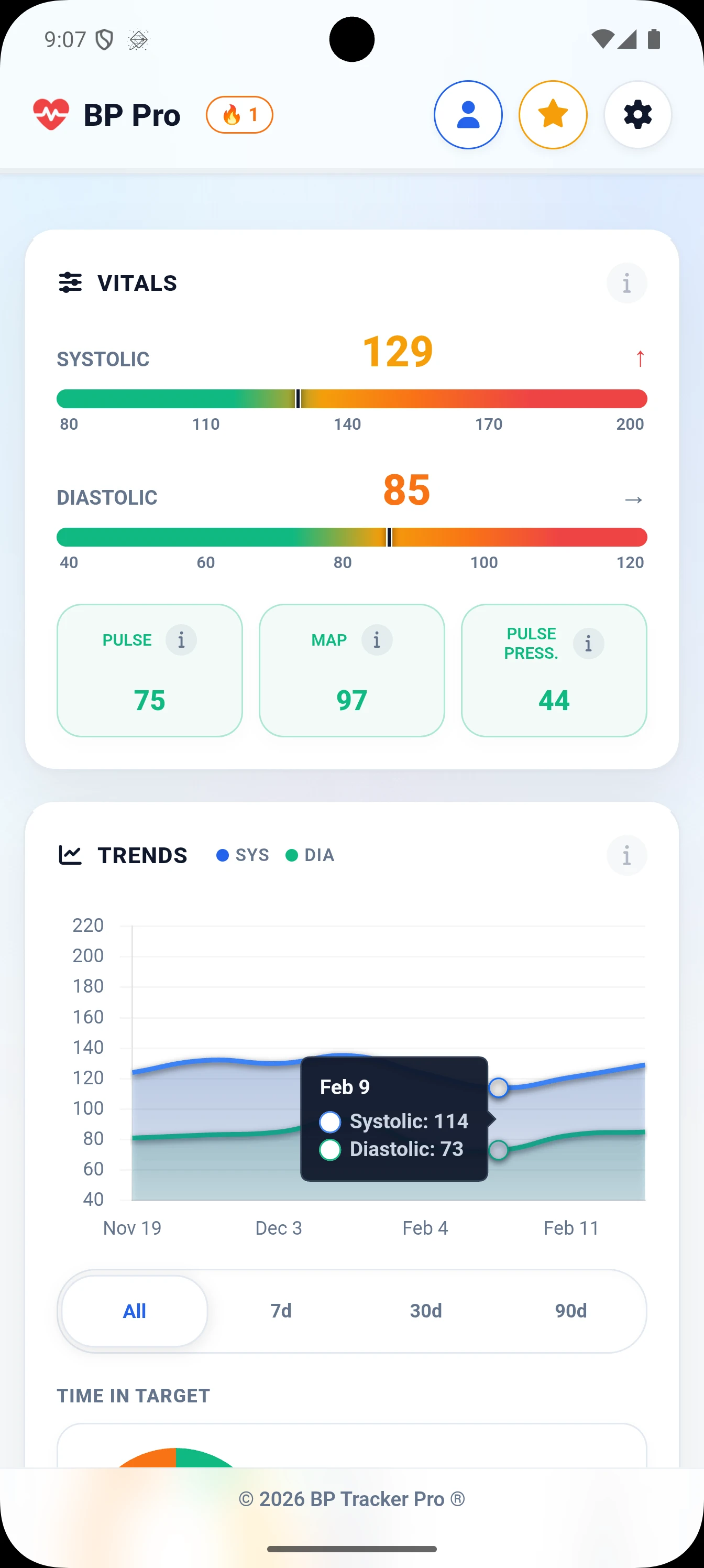
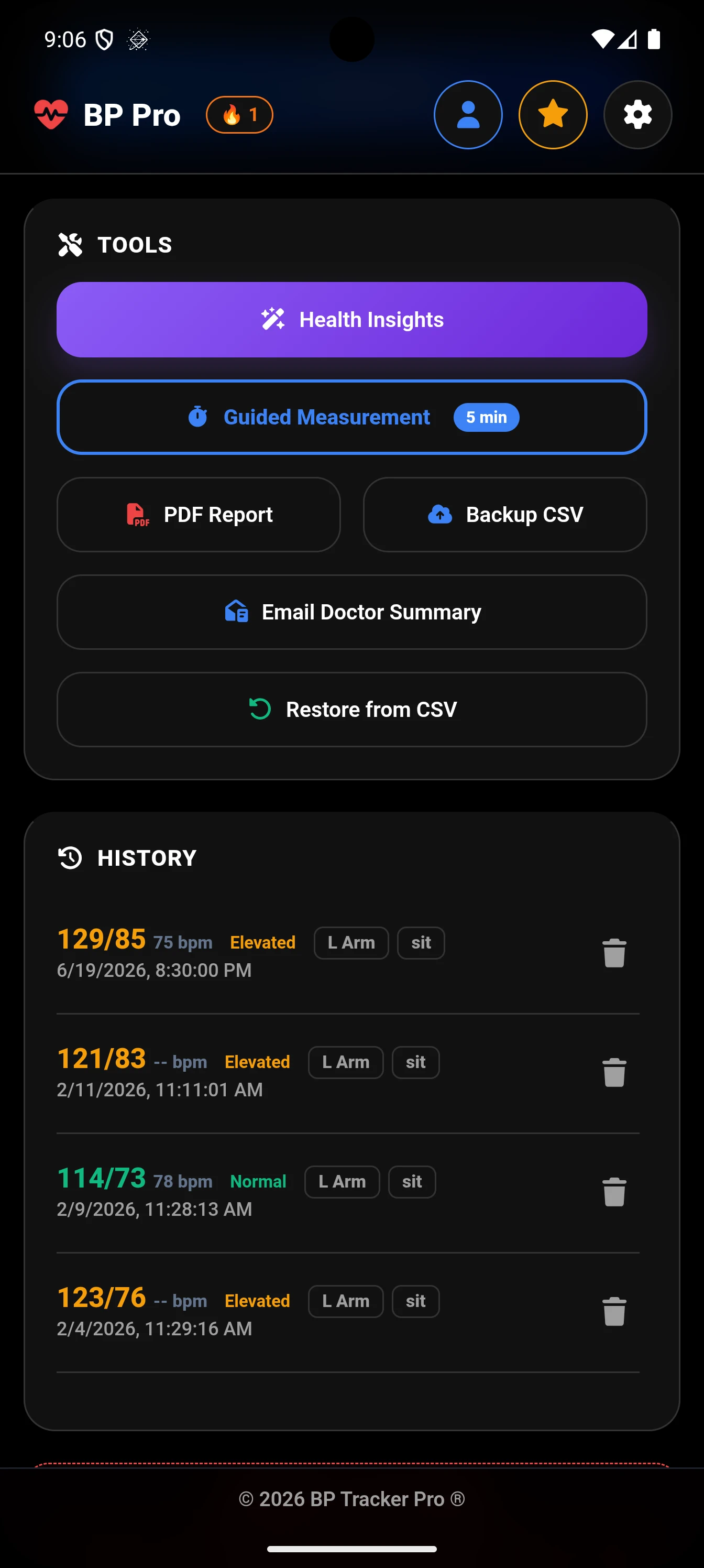
- Advanced Holistic Modules: Hypertension rarely exists in a vacuum. The app features optional modules to track your Blood Glucose (Blood Sugar), Weight, BMI, and Blood Oxygen (SpO2) all in one unified dashboard.
- The 500+ Medication Dictionary: Easily log which medications you took before a reading using the built-in autocomplete database containing over 500 commonly prescribed cardiovascular and metabolic drugs.
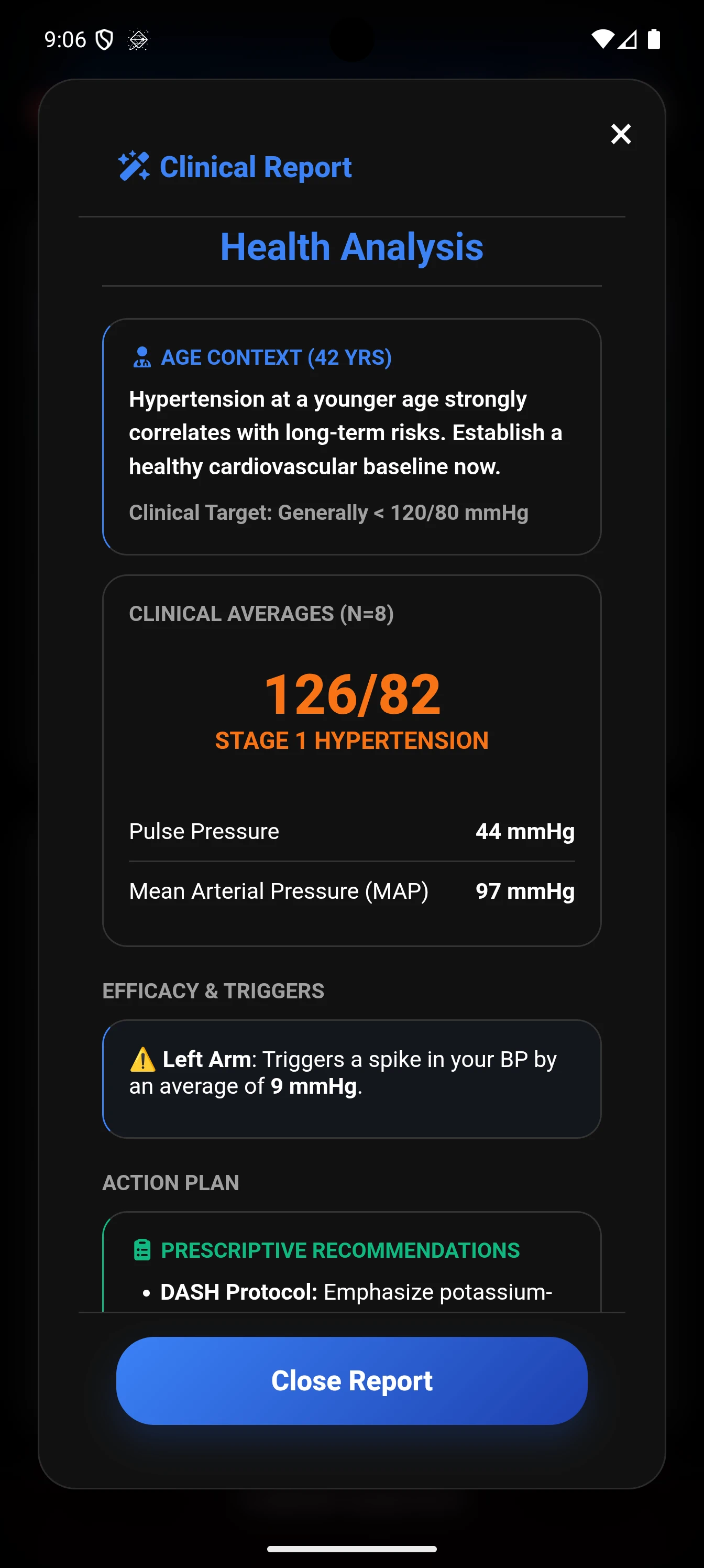
- Doctor-Ready PDF Reports: Stop handing your doctor a messy notebook. With one tap, BP Tracker Pro generates a professional PDF report featuring 30-day summaries, Morning vs. Evening average charts, and Mean Arterial Pressure insights. You can email it directly to your cardiologist.
- Family Support: Manage up to 8 individual profiles on a single device, keeping your parents', spouse's, and your own encrypted records totally separate.
Chapter 7: How to Measure Blood Pressure Correctly
A high-tech tracking app is useless if the data you input is flawed. Astonishingly, up to 80% of people take their blood pressure incorrectly at home. A simple error, like letting your arm hang down, can artificially inflate your reading by 10 points. Follow this strict Medical Measurement Checklist:
| Step | The Medical Rule | The Physiological Reason |
|---|---|---|
| 1. The 30-Minute Window | Do not smoke, vape, exercise, or drink caffeine for 30 minutes prior. | Nicotine and caffeine are stimulants that artificially constrict blood vessels and spike heart rate. |
| 2. The 5-Minute Rest | Sit in absolute silence for 5 full minutes before pressing start. | Walking or standing elevates pressure. You need a resting baseline. (Use the built-in "Guided Rest" breathing timer in BP Tracker Pro to lower your heart rate before measuring!) |
| 3. Posture & Legs | Back supported, feet flat on the floor, legs uncrossed. | Crossing your legs restricts blood flow in your lower body, forcing your heart to pump harder to circulate blood, artificially raising the reading. |
| 4. Arm Position | Arm resting on a table, bare skin, cuff exactly at heart level. | If your arm hangs below your heart, gravity pulls blood into it, inflating the numbers. If you roll up a tight sleeve, it acts like a tourniquet. |
| 5. Empty Bladder | Use the restroom before measuring. | A full bladder triggers the sympathetic nervous system, raising systolic pressure by up to 15 points! |
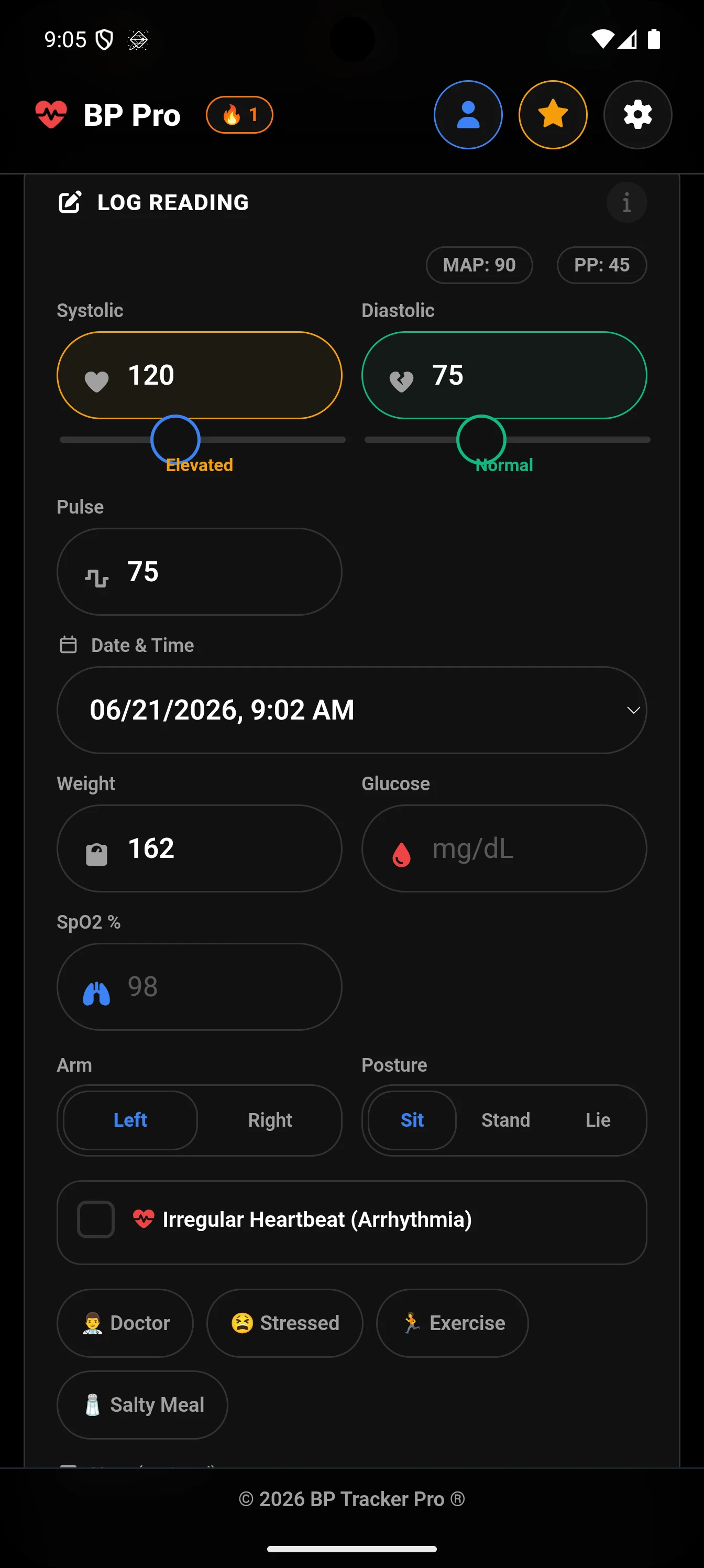
Context matters. Log your exact arm position, posture, and if an Arrhythmia was detected natively in BP Tracker Pro.
Chapter 8: Primary vs. Secondary Hypertension
Doctors categorize high blood pressure into two distinct types:
Primary (Essential) Hypertension: This accounts for 90% to 95% of all adult cases. There is no single, identifiable cause. It develops gradually over decades due to a compounding mix of genetics, aging, diet, and lifestyle.
Secondary Hypertension: This accounts for 5% to 10% of cases. The high blood pressure is a direct symptom of a specific, underlying medical condition. If the underlying cause is fixed, the blood pressure often drops back to normal immediately. Common culprits include:
- Kidney Disease: The kidneys control the body's fluid balance and sodium excretion.
- Adrenal Gland Tumors: Tumors can overproduce aldosterone, a hormone that raises BP.
- Medications: Birth control pills, NSAID pain relievers (like Ibuprofen), and oral decongestants (like Sudafed) can cause massive BP spikes.
Chapter 9: Dietary & Lifestyle Interventions
Medication is powerful, but lifestyle modifications are the bedrock of cardiovascular health. Strict adherence to lifestyle changes can frequently reduce blood pressure just as effectively as a pharmaceutical intervention.
1. The DASH Diet
The Dietary Approaches to Stop Hypertension (DASH) diet is scientifically engineered to lower blood pressure. It is not a fad diet; it is a clinical framework focusing on vegetables, fruits, and whole grains while strictly limiting saturated fats and red meat.
2. The Sodium-Potassium Balance
Sodium causes your body to retain water, increasing your total blood volume and forcing your heart to pump harder against the arterial walls. The goal is to consume less than 1,500 mg of sodium daily. However, avoiding the salt shaker isn't enough; 70% of sodium intake comes from hidden sources like canned soups, deli meats, and frozen dinners.
The antidote to sodium is Potassium. Potassium literally instructs your kidneys to flush excess sodium out of your body via urine, while simultaneously helping the walls of your blood vessels relax. (Top Potassium Sources: Bananas, sweet potatoes, spinach, avocados, and white beans).
3. Aerobic Exercise & Weight Loss
The heart is a muscle. Regular aerobic exercise (150 minutes of brisk walking or cycling per week) strengthens the heart, allowing it to pump more blood with less effort. Furthermore, losing just 5 to 10 pounds of body weight can result in a dramatic reduction in blood pressure.
Chapter 10: Pharmacology (Understanding Your BP Medications)
If lifestyle changes are insufficient, a physician will prescribe antihypertensive medications. Often, cardiologists prescribe two different medications at low doses rather than a single medication at a massive dose. This "combination therapy" targets different biological pathways simultaneously while minimizing side effects.
| Medication Class | Mechanism of Action | Common Examples |
|---|---|---|
| Diuretics ("Water Pills") | Helps the kidneys flush excess sodium and water from the body, thereby reducing total blood volume. Often the first line of defense. | Hydrochlorothiazide (HCTZ), Chlorthalidone |
| ACE Inhibitors | Relaxes blood vessels by blocking the body's formation of Angiotensin II, a chemical that naturally narrows vessels. | Lisinopril, Enalapril, Ramipril |
| ARBs | Similar to ACE inhibitors, but instead of blocking the formation, it blocks the action of Angiotensin II from binding to the vessels. | Losartan, Valsartan, Olmesartan |
| Calcium Channel Blockers | Prevents calcium from entering the muscle cells of the heart and arteries, allowing the arteries to relax and widen. | Amlodipine, Diltiazem, Nifedipine |
| Beta-Blockers | Blocks the effects of adrenaline, causing the heart to beat slower and with significantly less force. | Metoprolol, Atenolol, Bisoprolol |
Frequently Asked Questions (FAQ)
1. What is the "silent killer"?
High blood pressure is called the silent killer because it typically has zero symptoms until it has caused severe, irreversible damage to the heart, brain, or kidneys.
2. What is considered a Hypertensive Crisis?
A Hypertensive Crisis occurs when blood pressure reaches 180/120 mmHg or higher. This is a severe medical emergency because your blood vessels are under extreme pressure and may tear. Call 911 immediately, especially if accompanied by chest pain, shortness of breath, or vision changes.
3. Does drinking water lower blood pressure?
Staying hydrated is crucial. Severe dehydration makes blood thicker and prompts the body to release hormones that constrict blood vessels, raising pressure. Drinking adequate water helps maintain a healthy, normal blood volume.
4. Why do ACE inhibitors (like Lisinopril) cause a dry cough?
About 10-20% of people develop a persistent, dry, hacking cough on ACE inhibitors due to the buildup of a peptide in the lungs called bradykinin. If this happens, your doctor can usually switch you to an ARB (like Losartan) which achieves the same result without the cough side effect.
5. Is my medical data safe in BP Tracker Pro?
Yes, it is the safest option available. Unlike subscription apps, BP Tracker Pro is 100% offline. It has no cloud sync, requires no account creation, and has zero tracking ads. Your medical data never leaves your physical phone's encrypted sandbox.
6. Can anxiety cause high blood pressure?
Yes, anxiety and panic attacks trigger the "fight or flight" response, releasing massive amounts of adrenaline and cortisol, which cause a temporary but dramatic spike in blood pressure.
7. Is 130/80 considered high blood pressure?
Under the American Heart Association (AHA) guidelines, 130/80 mmHg is classified as "Stage 1 Hypertension." Under the European (ESC) guidelines, it is considered "High Normal."
8. Can I cure my high blood pressure permanently?
Primary hypertension is usually managed, not "cured." However, profound lifestyle changes (massive weight loss, strict DASH diet adherence) can sometimes allow patients to safely taper off medications under strict medical supervision.
9. Why is my blood pressure high only in the morning?
Your body naturally releases hormones like adrenaline upon waking to prepare you for the day. An exaggerated morning surge, however, is highly dangerous and is why most cardiovascular events happen in the AM.
10. Do bananas really lower blood pressure?
Yes! Bananas are exceptionally rich in potassium. Potassium actively helps the kidneys excrete sodium through urine and relaxes the tension in your blood vessel walls.
11. Does crossing my legs affect my blood pressure reading?
Yes. Crossing your legs restricts blood flow in your lower extremities, causing a temporary increase in pressure as your heart pumps harder to circulate blood. Always keep feet flat on the floor.
12. Can I exercise if I have high blood pressure?
Generally, yes. Regular aerobic exercise strengthens the heart. However, if your BP is extremely high (Stage 2 or crisis), you must consult a cardiologist before starting a new regimen.
13. Is a wrist monitor as accurate as an arm cuff?
Wrist monitors are generally considered less accurate than upper-arm cuffs because the wrist arteries are narrower, closer to the skin surface, and it is notoriously difficult to keep the wrist at the exact level of the heart during measurement.
14. Does talking affect my reading?
Yes, actively talking or listening to someone talk can raise your systolic reading by up to 10 mmHg. You must remain completely silent during the measurement.
15. Can a full bladder raise blood pressure?
Yes, significantly. Having a full bladder triggers sympathetic nervous system activity, which can raise systolic pressure by 10 to 15 points. Always use the restroom before measuring.
16. What is White Coat Syndrome?
It is a phenomenon where a patient's blood pressure readings are artificially high at the doctor's clinic due to anxiety, but perfectly normal when relaxed at home.
17. What is Masked Hypertension?
The exact opposite of White Coat Syndrome. Your readings are normal at the clinic, but dangerously high during your daily life at home or work due to environmental stress.
18. How often should I track my blood pressure at home?
If you are newly diagnosed or tweaking medications, your doctor will likely ask you to track it twice daily (once in the morning, once in the evening) for two straight weeks using an app like BP Tracker Pro.
19. Is coffee bad for blood pressure?
Caffeine causes a short-term, acute spike in blood pressure. You should strictly avoid caffeine for at least 30 minutes before taking a reading.
20. Does alcohol raise blood pressure?
While a single drink might relax you, consuming more than 1-2 drinks a day can significantly and chronically elevate your long-term blood pressure.
21. What is the DASH diet?
Dietary Approaches to Stop Hypertension. It is a scientifically proven diet emphasizing fruits, veggies, whole grains, and low-fat dairy while minimizing sodium and saturated fats.
22. Does chronic stress cause hypertension?
Yes. Chronic stress keeps your body in a constant state of "fight or flight," over-producing cortisol and adrenaline, leading to long-term elevated blood pressure.
23. How does smoking affect my heart?
Nicotine causes an immediate, temporary spike in blood pressure. More importantly, long-term smoking chemically damages the inner lining of your arteries (endothelium), leading to plaque buildup.
24. Can weight loss lower my BP?
Yes. Weight loss is one of the most effective lifestyle changes for controlling blood pressure. Losing even 5 to 10 pounds can yield a significant reduction.
25. What is Sleep Apnea?
A severe condition where you stop breathing momentarily during sleep. The resulting oxygen deprivation causes extreme physical stress and massive blood pressure spikes throughout the night.
26. Are there foods that naturally dilate blood vessels?
Foods rich in nitrates (like beets and spinach) are converted into nitric oxide in the body, which helps to naturally dilate and relax blood vessels.
27. Does magnesium help blood pressure?
Yes, magnesium is a mineral that helps blood vessels relax. A clinical magnesium deficiency can directly contribute to hypertension.
28. Can I eat dark chocolate?
Yes, in moderation. Dark chocolate (over 70% cocoa) contains flavanols, which promote the production of nitric oxide, a chemical that relaxes blood vessels.
29. What are ACE inhibitors?
Medications (like Lisinopril) that lower blood pressure by blocking the body from producing angiotensin II, a chemical that causes blood vessels to narrow.
30. What are Beta-Blockers?
Medications (like Metoprolol) that block adrenaline, causing the heart to beat slower and with less force, thereby reducing blood pressure.
31. What are Diuretics?
Also known as "water pills" (like HCTZ), they prompt your kidneys to flush excess sodium and water from the body, lowering total blood volume.
32. Why did my doctor prescribe two different medications?
Using low doses of two different classes of drugs targets different biological pathways simultaneously and is often more effective (with fewer side effects) than a massive dose of a single drug.
33. Can I stop taking my pills if my numbers are normal?
NO. Your numbers are normal because of the medication. Stopping medication abruptly without a doctor's guidance can cause a lethal rebound spike in pressure.
34. Do blood pressure pills cause erectile dysfunction?
Some older medications (like certain beta-blockers and high-dose diuretics) can. If this happens, talk to your doctor; there are many modern alternatives (like ARBs) that do not have this side effect.
35. Can I take Ibuprofen with high blood pressure?
Use extreme caution. NSAIDs like ibuprofen and naproxen can cause your body to retain fluid, spiking your BP and decreasing the effectiveness of your hypertension medications.
36. What is a Calcium Channel Blocker?
Medications (like Amlodipine) that prevent calcium from entering the muscle cells of the heart and arteries, allowing the vessels to remain relaxed and open.
37. How long do BP meds take to work?
Most take a few days to a few weeks to reach their full, stable therapeutic effect. You should track your progress daily in BP Tracker Pro to visualize the trend.
38. Can BP Tracker Pro share data with my doctor?
Yes. You can generate a comprehensive, color-coded PDF or raw CSV report and email it directly to your doctor's office from within the app.
39. Does BP Tracker Pro actually measure my blood pressure?
No smartphone app can physically measure blood pressure. You must use a validated physical medical device (like an Omron cuff) to take the measurement, then log those numbers into the app for tracking and analysis.
40. Can I track my elderly parents' BP on my phone too?
Yes. BP Tracker Pro supports up to 8 entirely separate user profiles on a single device, making it perfect for family caregivers.
41. What is Pulse Pressure?
The difference between your systolic and diastolic numbers (e.g., 120 - 80 = 40). A high pulse pressure (over 60) can indicate stiff arteries. The app calculates this automatically.
42. What is MAP (Mean Arterial Pressure)?
The average pressure in a patient's arteries during one complete cardiac cycle. It is an advanced clinical metric calculated automatically by BP Tracker Pro.
43. Can I log my blood sugar in the app too?
Yes! BP Tracker Pro includes an optional, comprehensive Blood Glucose tracking module for diabetic and pre-diabetic patients.
44. Does the app track weight and BMI?
Yes. The app has an integrated Weight and BMI tracker to help you directly correlate your weight loss journey with improvements in your blood pressure.
45. Why should I use this app over a paper logbook?
Paper logs cannot draw algorithmic charts, calculate advanced averages, isolate morning vs. evening data, or highlight dangerous trends for your doctor to review.
46. Is there a monthly subscription for the app?
No! BP Tracker Pro is a premium, pay-once application. You own it for life with zero ads, zero recurring fees, and zero cloud storage privacy risks.
47. Does salt substitute lower blood pressure?
Salt substitutes replace sodium with potassium. This can be great for lowering BP, but can be deadly if you have kidney disease or are taking certain BP medications. Always ask your doctor first.
48. Can I take my blood pressure over my sleeve?
No. You should always apply the cuff to bare skin. Rolling up a tight sleeve can act like a tourniquet and dramatically alter the reading accuracy.
49. Why is the first reading always higher?
The first reading is often subject to slight anxiety or improper initial resting. This is why doctors recommend taking 2 or 3 readings a minute apart and averaging the final two.
50. Does my resting heart rate matter?
Yes. A lower resting heart rate generally implies more efficient heart function and better cardiovascular fitness. BP Tracker Pro allows you to log and track your pulse alongside your BP.
Conclusion
High blood pressure is a formidable, silent enemy, but it is one you can defeat. By understanding the mechanics of your cardiovascular system, committing to dietary and lifestyle changes, and diligently tracking your progress with a secure, private tool like BP Tracker Pro, you are taking proactive steps to add healthy, vibrant years to your life.
Always work closely with your healthcare provider, listen to your body, and let your data guide your journey to optimal health.
Bibliography & Authoritative Sources
- American Heart Association (AHA) - 2017 Guideline for the Prevention, Detection, Evaluation, and Management of High Blood Pressure in Adults.
- European Society of Cardiology (ESC) - 2023 ESC Guidelines for the management of arterial hypertension.
- Centers for Disease Control and Prevention (CDC) - High Blood Pressure Fact Sheet.
- World Health Organization (WHO) - Hypertension Global Report.